Your first win in this game!
 New personal best!
 First to solve this deal!
 New record for this deal!






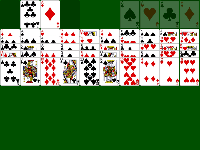
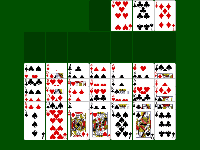
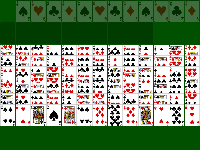
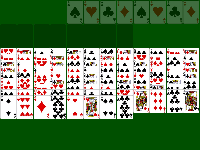
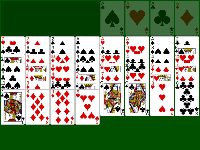
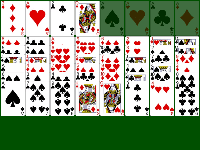
Play Baker's Game Solitaire Online for Free
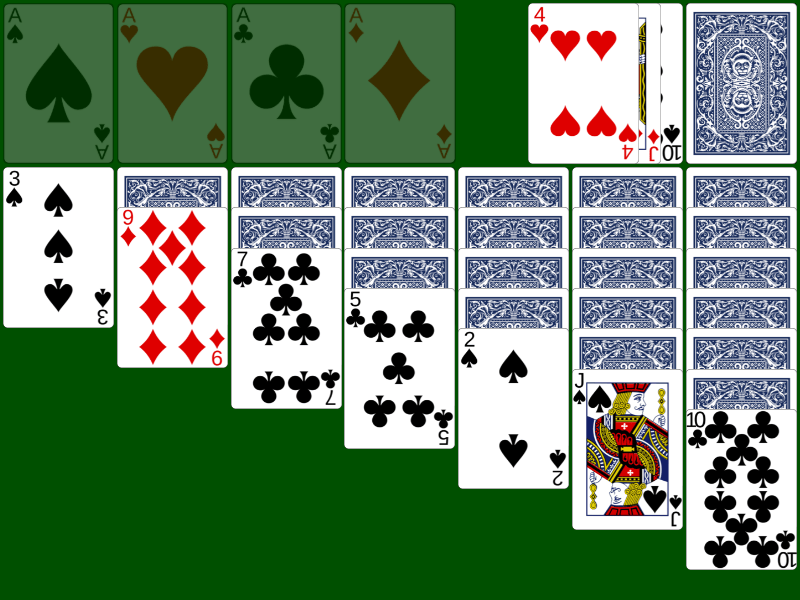
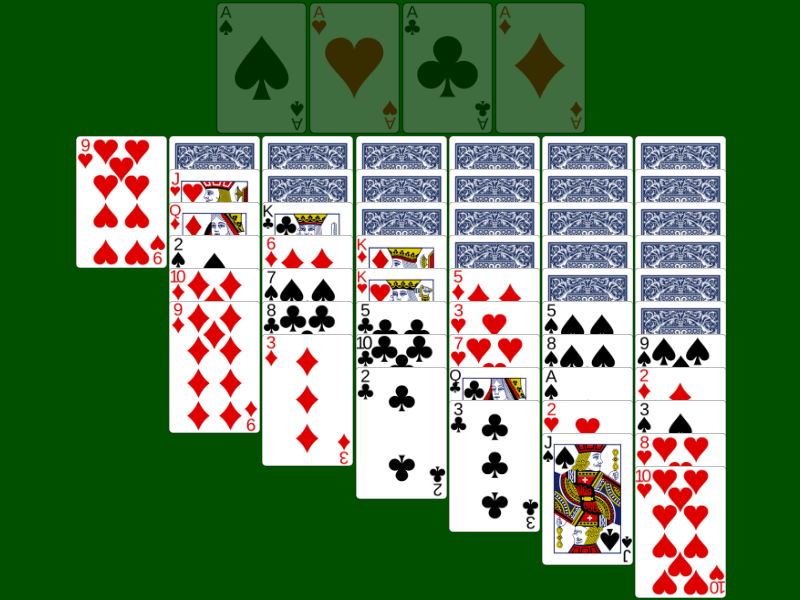
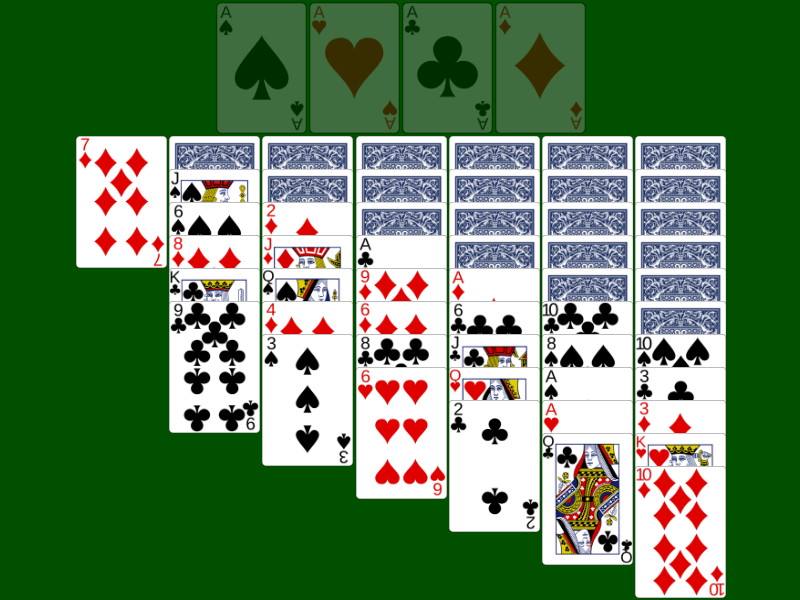
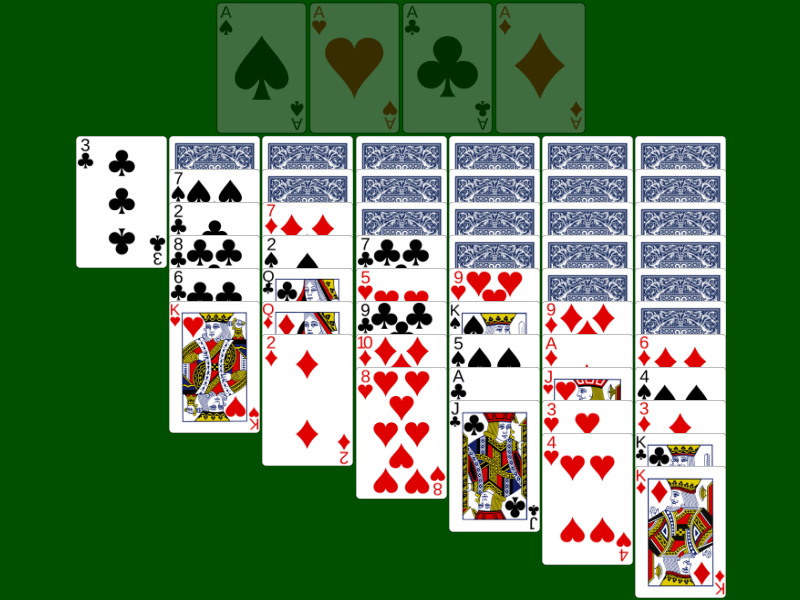
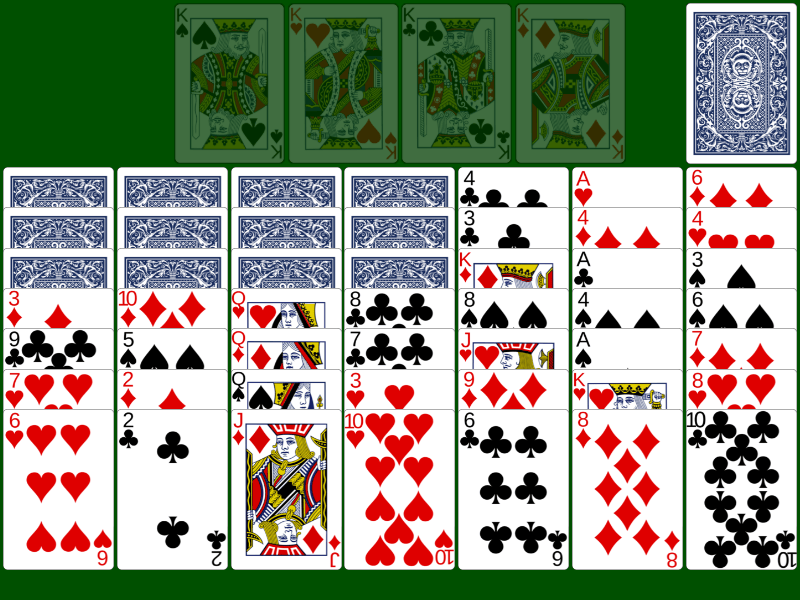
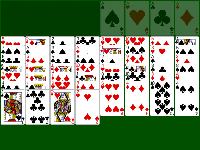
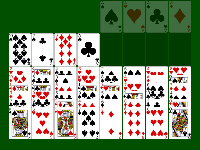
Baker's Game Solitaire is FreeCell Solitaire with one change: in the columns you build down in the same suit, not in alternating colours. The deal is the same, eight columns with every card face up and four free cells. Because each card has only one place to go, the game is much harder, and about one deal in four can't be won at all. You can play it here for free, online, with no download and no sign-up, and in full screen if you like.
How to play Baker's Game Solitaire
Goal
Move all 52 cards to the four foundations. Each foundation holds one suit, built up from Ace to King.
The deal
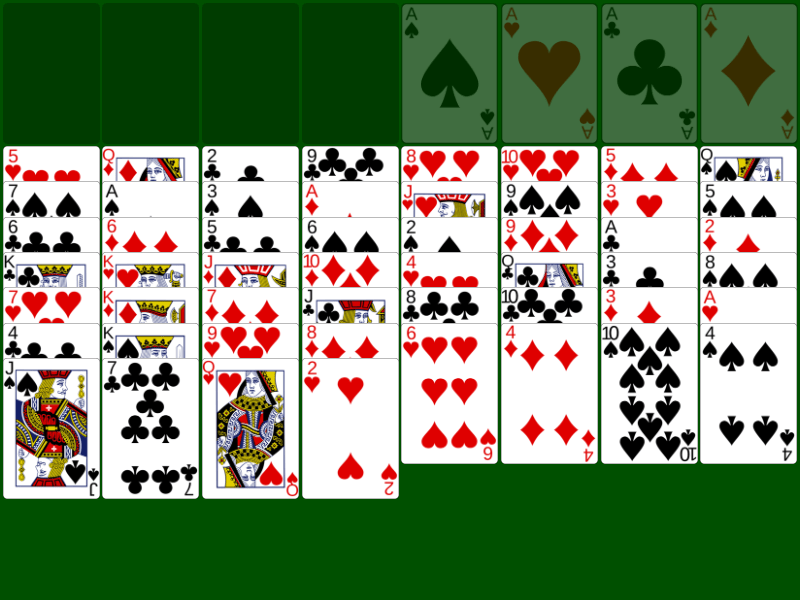
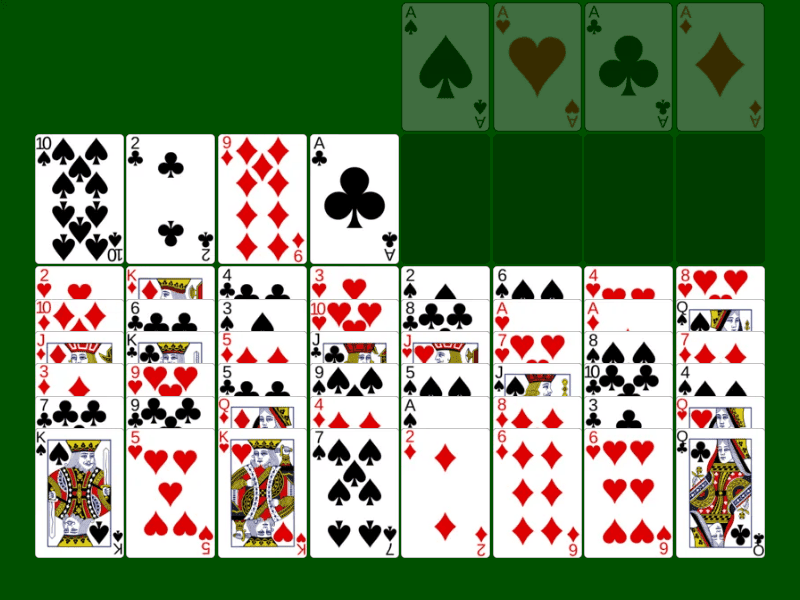
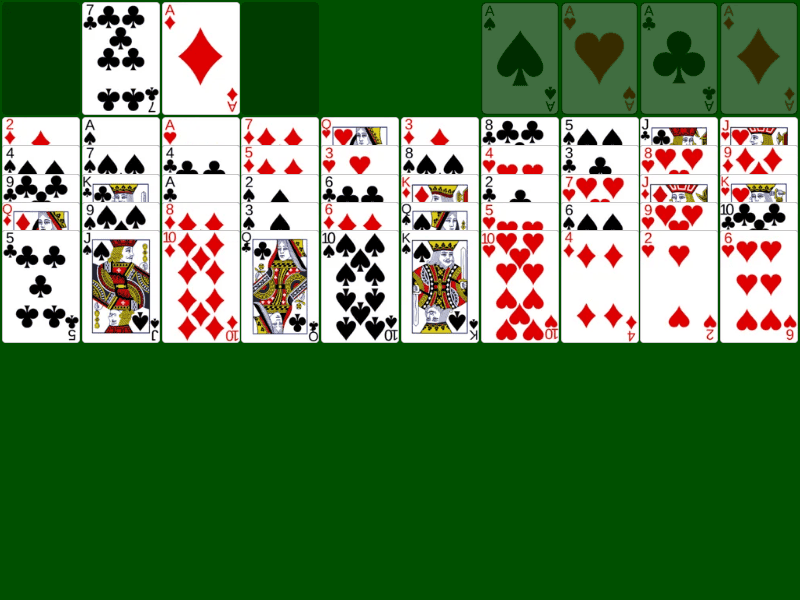
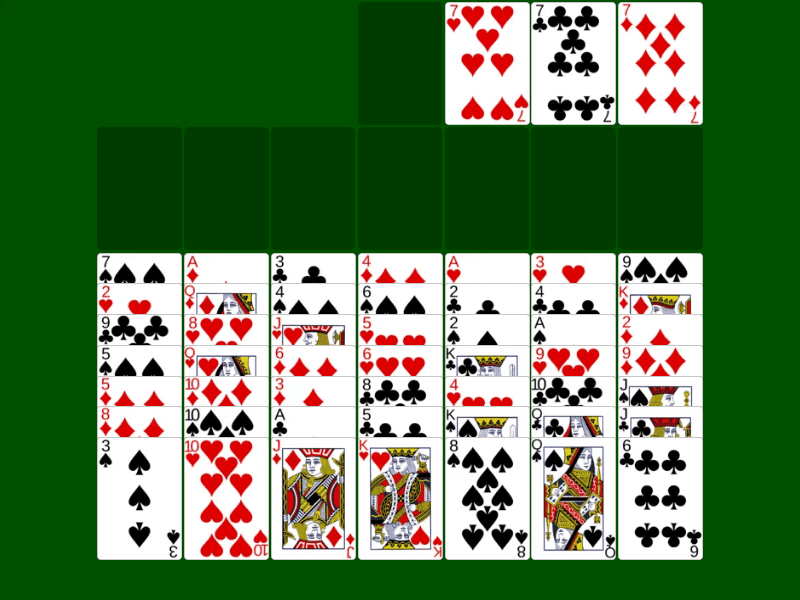
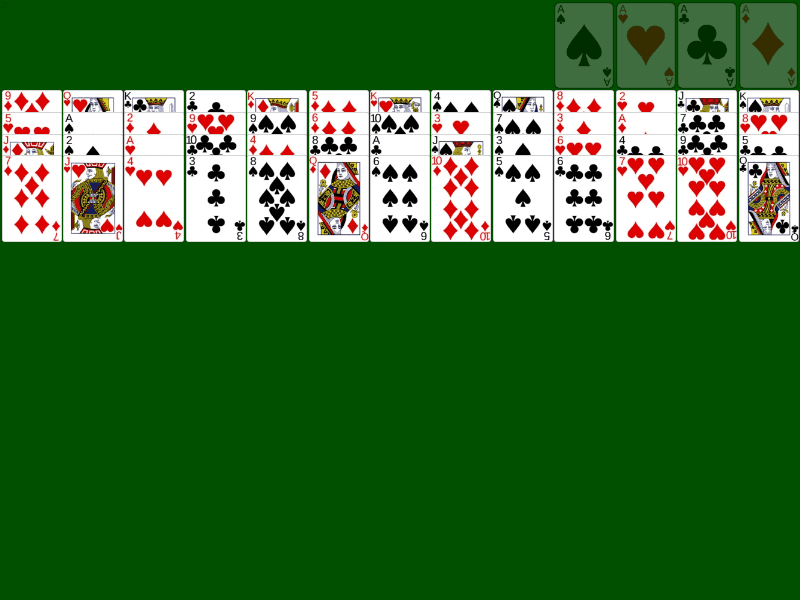
- Tableau: 8 columns, all face up. The first four columns get 7 cards each and the other four get 6 cards each.
- Free cells: four empty places at the top. Each one holds a single card.
- Foundations: four empty places, one for each suit.
There is no stock. Every card is in play from the start.
Rules
- Building down: in the tableau, put a card on a card one rank higher and of the same suit, such as the 6 of hearts on the 7 of hearts.
- Free cells: any card from the bottom of a column can go into an empty free cell. From there it can go back to the tableau or to a foundation.
- Empty columns: any card can go into an empty column.
- Foundations: start each foundation with an Ace, then add 2, 3 and so on up to King, in the same suit. Aces go up by themselves.
- Moving several cards: you can move a group that is in order, down and in one suit. How many cards depends on your free space: take the number of empty free cells plus one, and multiply it by the number of empty columns plus one. With 2 empty free cells and 1 empty column you can move (2 + 1) × (1 + 1) = 6 cards. If you are moving the group into an empty column, that column doesn't count.
Tips to win more often
- Look before you move. Every card is visible, so the whole game is in front of you. Find where the Aces and 2s are and plan how to free them.
- Watch the suits. In the columns each card fits on only one card: the next one up of its own suit. When a card lies on a lower card of its suit, one of them has to leave the column first, so plan those columns early.
- Keep free cells empty. Each card in a free cell lowers the number of cards you can move at once. Use them for a short time, then empty them again.
- An empty column is worth more than a free cell. It can hold a whole ordered group, not just one card. Try to empty one column early.
- Give the empty columns to Kings. Any card can go into an empty column, but a King there never has to move again, and its suit can then be built on it all the way down.
- Use undo to test ideas. There is no limit on undo. If you are not sure which move is better, try one and go back.
FreeCell Games
All the FreeCell games deal every card face up, so you can see the whole game from the first move, and most of them give you free cells, places that hold one card each. They differ in how you build in the columns, how many cells, columns and decks there are, and what an empty column takes.
- FreeCell Solitaire: 8 columns, 4 free cells, building down in alternating colours. The classic.
- Challenge FreeCell Solitaire: FreeCell with the Aces and 2s dealt under all the other cards.
- Super Challenge FreeCell Solitaire: Challenge FreeCell where only a King can go into an empty column.
- ForeCell Solitaire: the four free cells full at the start, and only Kings in empty columns.
- Baker's Game Solitaire: FreeCell building down in suit. Much harder: about one deal in four can't be won.
- Eight Off Solitaire: 8 free cells, 4 of them full at the start, building in suit, only Kings in empty columns.
- Seahaven Towers Solitaire: 10 columns of 5, two cards in the cells, building in suit, only Kings in empty columns.
- Penguin Solitaire: 7 free cells, foundations that start from the first card dealt, building in suit.
- Baker's Dozen Solitaire: 13 columns of 4, no free cells, one card at a time.
- Double FreeCell Solitaire: two decks, 10 columns, 6 free cells and four foundations of 26 cards.
- FreeCell Duplex Solitaire: two decks, 12 columns, 8 free cells. For a computer or a tablet.
- Triple FreeCell Solitaire: three decks, 13 columns, 10 free cells. For a computer or a tablet.
- Double Seahaven Solitaire: Seahaven Towers with two decks, 11 columns and 9 free cells. For a computer or a tablet.
The table further down shows how often players win each one.
Frequently asked questions
Is Baker's Game Solitaire free?
Yes. Every game on Solitaire Land is free to play in your browser, on a computer, tablet or phone. There is nothing to download and you don't need an account.
Can I play in full screen?
Yes. Use the full screen button in the bar above the game. You can also make the cards bigger or smaller with the zoom slider in the bar below the game.
What does the Hint button do?
It shows you one move you can make right now. It doesn't play the game for you, so you still choose what to do next.
How is Baker's Game different from FreeCell?
The deal, the free cells and the foundations are the same. Only the building changes: a card goes on the next card up of its own suit, so the 6 of hearts can only go on the 7 of hearts, not on any black 7. Each card has one place in the columns instead of two, which makes the game much harder.
Can every Baker's Game Solitaire deal be won?
No. About one deal in four can't be won, however well you play: a computer has played the first 5,000 deals and proved 1,253 of them lost. Random skips those deals, so you won't get one that is known to be lost.
What are winnable deals?
A winnable deal is one that at least one player has already won, so you know it can be done. Choose Winnable in the New game menu to play one, or Random for any deal.
Where Baker's Game comes from
Baker's Game is older than FreeCell. Martin Gardner described it in Scientific American in 1968 and named it after C. L. Baker, who had shown it to him. FreeCell came from it: building in alternating colours made it much easier. If Baker's Game feels too hard, go back to FreeCell Solitaire. For building in suit with more room, try Eight Off Solitaire.